
By Emma Chang, Social Media Manager Hakka Association of New York

Hakka women have long played a vital role in preserving culture and contributing to society across various fields. I am delighted to introduce two remarkable women who have made significant contributions to the Hakka community in the U.S.: Ai-Lin Chung, President of the Hakka Association of NY, and Lucy Liou, the Association’s Chair.
Ai-Lin Chung’s career in the export garment industry took her across the globe, where she managed market development, product development, and client relations, primarily in Europe and the U.S. Her adaptability and willingness to embrace challenges stem from the values instilled by her Hakka upbringing—respect for elders, family responsibility, and resilience in the face of change.
Upon joining the Hakka Association of NY, Ai-Lin initially volunteered but quickly became a driving force in organizing events and fostering community engagement. She sees the biggest challenge in cultural preservation as the generational gap: younger Hakka generations, often born or raised in the U.S., feel less connected to traditional associations. To address this, she emphasizes digital engagement, youth participation, and cross-cultural collaborations.
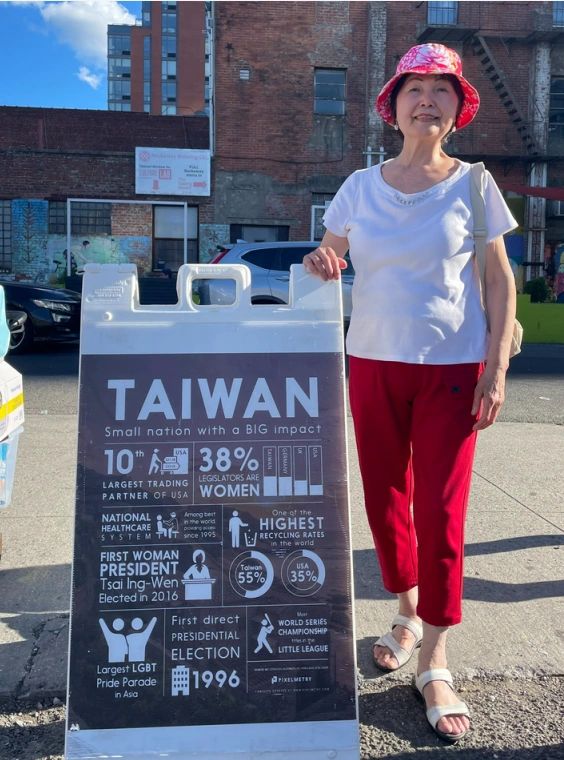
Lucy Liou, a retired Registered Nurse (RN), built an impressive career in healthcare. She started as a nursing instructor in Taiwan before moving to the U.S., where she advanced from staff nurse to department head. Passionate about health education, she pursued further studies in Healthcare Administration and Holistic Nursing to enhance her expertise.
Growing up in a Hakka village, Lucy was deeply influenced by her uncle, Ching-Ting Yang, a pioneer in Hakka language education in Taiwan. His dedication inspired her lifelong commitment to cultural preservation. Since the Association’s founding in 1997, she has remained actively involved, serving as President twice and continuously supporting Hakka initiatives.
Even in retirement, Lucy finds joy in mentoring young members, sharing experiences, and fostering a sense of belonging. However, she acknowledges the challenges of Hakka language preservation—many Hakka families now prioritize Mandarin or English at home. She believes creating more opportunities for everyday use of Hakka is essential for its survival.
Both Ai-Lin and Lucy emphasize the importance of community engagement, adaptability, and innovation in preserving Hakka culture. While challenges exist, they remain optimistic that by integrating modern tools, encouraging youth participation, and strengthening community bonds, the Hakka spirit will continue to thrive for generations to come.
 English
  Chinese