
By Chi-Chun Yuan, Psbalay Community Social Worker

“Heaven and earth are but a traveler’s inn for all beings.” — Tang Dynasty poet Li Bai
Humans are merely guests on this earth, and the Hakka people are among the few groups who refer to themselves as “guests.” The term “guest” reflects the interaction between nature and humanity. Hakka ancestral traditions emphasize diligence as migrating laborers and frugality through the wise use of natural resources.
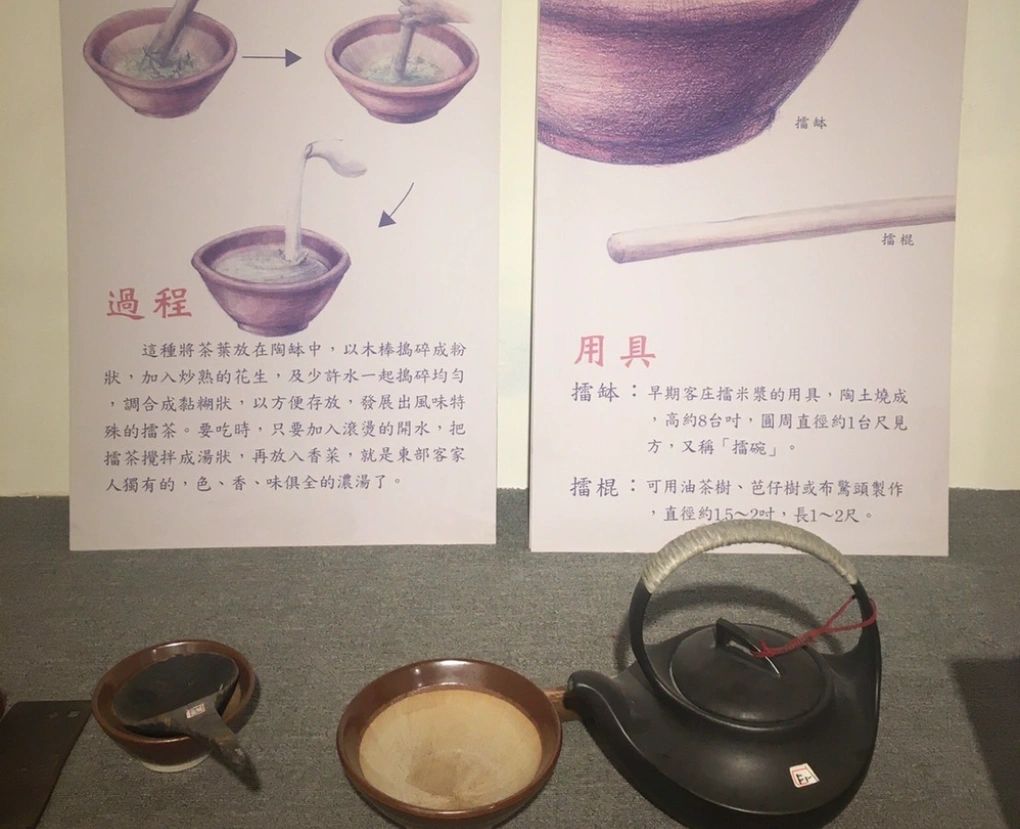
Hakka cultural practices reflect these values. Lei cha (pounded tea) blends grains and tea leaves into a porridge-like meal for sustenance. Hakka blue dye and the Hakka shan (traditional work shirt) highlight durable, dirt-resistant clothing for labor. Hakka stir-fry, a signature dish, creatively uses leftover food scraps, emphasizing resourcefulness. These practices embody the Hakka worldview, deeply tied to the land.
A recent example of this philosophy in practice is a study presented at a Hualien conference in Taiwan, “20 Years of Fenglin Community Building—From Local Development to the International Cittaslow Movement” by Chi-Jung Hsieh. The study explored how Hakka principles have been applied in Fenglin to strengthen community ties and encourage young people to return or settle there.
Hualien’s Hakka villages trace back to the Japanese colonial period, when the Japanese government established Yoshino, Toyota, and Hayashida villages, bringing mainly Hakka laborers for development. Today, areas like Ji’an, Fenglin, and Toyota blend Japanese architecture with Hakka cultural elements.
Hsieh highlighted how Fenglin became the first Taiwanese town to gain certification from Italy’s Cittaslow (Slow City) movement. Local Hakka organizations embraced the “slow” philosophy, emphasizing respect for local culture, traditions, and mindful living while challenging fast food culture and overconsumption. This mindset transformed Hakka spirit from a family tradition into conscious public activities, reinvigorating the community and enhancing its appeal.
Key community activities in Fenglin, Taiwan from 2014 to 2020 (pre-COVID) reflect the relationship between people and the land:
- Mud Sports Festival: A playful event where participants compete barefoot in the mud, reconnecting with the earth. The core belief is that physically feeling the soil strengthens the memory of home, encouraging return to rural roots.
- Snail Slow Market: A marketplace emphasizing slow, local economics over chain stores. It brings together farmers, artisans, and small vendors, fostering personal connections within the community.
- Fenglin Peanut Festival: Celebrating the town’s traditional peanut crop, inviting visitors to participate in rural activities like peanut harvesting and shelling, promoting a simpler agricultural lifestyle.
- Anti-Poultry Farm Campaign: The community collectively resisted the construction of a large-scale corporate chicken farm, opposing mass production and corporate expansion while reflecting on overdevelopment issues.
From the industrial and technological progress perspective, Hualien has often been labeled Taiwan’s “backwater,” with economic challenges and population decline. However, Hsieh’s work illustrates that true community development doesn’t mean rushing forward but rather returning to cultural roots to find sustainable paths for population retention, economic stability, and social cohesion.
Finally, it’s crucial to emphasize that the Hakka identity (“guest”) is not in competition with Hualien’s Indigenous identity (“native”). Fenglin is a shared space where Indigenous people and Hakka coexist. The concept of “guest” reflects a philosophy of coexistence between humanity and nature. In the face of modern resource depletion and ecological crises, this worldview holds valuable lessons, inspiring other cultural communities worldwide.
 English
  Chinese